

You are here

قراءة كتاب Two Daring Young Patriots; or, Outwitting the Huns
تنويه: تعرض هنا نبذة من اول ١٠ صفحات فقط من الكتاب الالكتروني، لقراءة الكتاب كاملا اضغط على الزر “اشتر الآن"
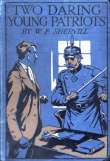
Two Daring Young Patriots; or, Outwitting the Huns

home, Dale," he said soberly. "I dare say I can pass with you as an Englishman, but it won't do to take risks. Our bag should be at the Central Post Office, so let us get it and take the first train back to Liége."
"If there are any trains bound for the frontier that are not crammed with troops," responded Dale somewhat significantly.
"Oh, shut up! Come along and let's see."
They lost not a moment in getting their bag and having it conveyed to the railway station. Fully alive to the situation, they now kept their eyes well open and noticed things they would never have noticed before. For one thing, it struck them that the post office official who handed their bag over to them seemed decidedly over-curious, and remarked that he supposed they were going to the railway station. That was disconcerting enough, but when they arrived at the station, and were almost immediately accosted by a man whom they both remembered seeing inside the post office, they felt almost as though they were already under lock and key.
Not that the man was unfriendly. He was quite the reverse. He seemed anxious to strike up an acquaintance, wished to know exactly where they were going, and gave them to understand that there was nothing he desired more than to be allowed the privilege of making a part of the journey with them.
Max presently gave Dale a meaning glance. It was all very well for an Englishman like Dale, he felt, but for him, virtually a Belgian, the situation was wellnigh desperate.
"I say, Dale," he said casually, "we must have some sandwiches to eat in the train. Stay here by the bag while I get some—or perhaps this gentleman wouldn't mind looking after it for a moment?"
The young German hesitated a second, and then nodded. Max and his friend strolled coolly off, arm in arm, towards the refreshment buffet. Neither looked back, but their conversation was far from being as airy and unconcerned as their manner might have seemed to indicate.
"We must leave the bag and get clear at once," cried Max emphatically. "The fellow has been set to watch us and see that we don't get out of the country. I think he must believe we are both English, and it therefore looks as though the Germans think England is on the point of coming in too. See, now, let us stroll quietly in at this door and slip out again at the end one. Then into the street and somewhere—no matter where—so long as it is out of the way of spying eyes."
They did so with an unhurried celerity that might have deceived a smarter man than the supposed spy. Soon they were clear of the town and in the open country beyond, and it was not till then that they felt as though they could talk unrestrainedly together.
"Now what shall we do, Max? Walk to the next station out from Bingen and see if we can get a train for home?" enquired Dale, not too hopefully.
"No, old man; we must keep clear of railways and railway stations. Let us make tracks for the frontier as we are, and go all out."
"It will be dark in another hour."
"Never mind. We must foot it all night. We have no time to lose, and we must not throw away a single hour. In fact, it is hardly safe for us to be about in daylight anywhere. You look as English as they are made, and I'm not much better."
"All right! I'm game for an all-night tramp. Come on."
"We have about seven hours of darkness before us, and I reckon we ought to be able to do four miles an hour. That gives us about thirty miles. It's less than that to the frontier, and we ought to be able to manage it, even if we have to leave the road and cut straight across country. Come along; we'll keep to the road while we can, but if too risky we must go helter-skelter, plumb for the frontier."
That night march neither of them is ever likely to forget. For an hour or so they tramped along the road unmolested. Then they began to find soldiers and policemen very much in evidence, and, fearing to be questioned, they left the road and took to the fields and open country. It was desperately rough going in many places, and instead of doing four miles an hour they could oftentimes do no more than two. But they stuck gamely to their task, and plodded steadily on all through the night, realizing more surely with every step they took that it was a plain case of now or never.
For every time they neared a road they found it alive with soldiers, all marching steadily in one direction—towards the Belgian frontier. The still night air resounded with the tramp of innumerable feet, and now and again they could catch the distant rumble of heavy guns.
When day broke they were still in Germany, but near the frontier, and in a sparsely peopled district. They were both nearly dead-beat, covered with mud from head to foot, and with their clothes torn half off their backs. It seemed a risky business to let themselves be seen anywhere in that condition, but finally Max chose a lonely farm-house, and, after cleaning himself up as much as possible, managed to make a purchase of a good supply of food. They then tramped on for another mile or two, ate a good meal, hid themselves in a dry ditch, and instantly dropped asleep.
It was ten o'clock when they awoke, and after some discussion they decided to make the few miles between them and the border at once, and then to purchase cycles and press for home. This they did exactly as they planned, and, though often delayed and compelled to make wide detours to avoid bodies of German cavalry, they managed to reach Liége safely in the evening of the same day.
The sights that met their gaze on the latter part of their journey made them doubly eager to get within the safety of the ring of forts surrounding Liége. Peasants were fleeing from the frontier villages, and their tales of what the Germans had done to their homes and dear ones made the blood of Max and his friend alternately freeze with horror and boil with rage. Their tales were a long catalogue of deeds of ruthless barbarity, cold-blooded cruelty, lust, and rapine. The smoke of burning houses seen in the distance gave emphasis to their tales of horror, and Max and Dale at last felt as though the world must be coming to an end. Indeed, the world of make-believe German civilization was coming to an end in a wild outburst of unrestrained cruelty and lust.
But at Liége, they told one another, things would be different. There the invaders would come against something more than villages peopled with frightened peasants and trustful countryfolk, and would realize in their turn something of the terribleness of war.