

You are here

قراءة كتاب Raeburn
تنويه: تعرض هنا نبذة من اول ١٠ صفحات فقط من الكتاب الالكتروني، لقراءة الكتاب كاملا اضغط على الزر “اشتر الآن"
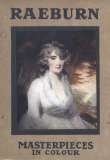

MASTERPIECES
IN COLOUR
EDITED BY —
T. LEMAN HARE
RAEBURN
1756-1823
PLATE I.—LORD NEWTON (Frontispiece).
(National Gallery of Scotland.)
This chef-d'oeuvre, which dates from about 1807, represents one of the most celebrated characters who ever sat upon the bench of the Court of Session. Famous in his day for "law, paunch, whist, claret, and worth," the exploits of Charles Hay, "The Mighty," as he was called, have become traditions of the Parliament House. (See p. 79.)

RAEBURN
BY JAMES L. CAW
ILLUSTRATED WITH EIGHT
REPRODUCTIONS IN COLOUR

LONDON: T. C. & E. C. JACK
NEW YORK: FREDERICK A. STOKES CO.
1909
CONTENTS
| Introduction | |
| Chapter | I. |
| " | II. |
| " | III. |
| " | IV. |
| " | V. |
| " | VI. |
LIST OF ILLUSTRATIONS
| Plate | ||
| I. | Lord Newton (National Gallery of Scotland) |
Frontispiece |
| II. | Children of Mr and the Hon. Mrs Paterson of Castle Huntly (In the possession of Chas. J. G. Paterson, Esq.) |
|
| III. | Mrs Lauzun (National Gallery, London) |
|
| IV. | Mrs Campbell of Balliemore (National Gallery of Scotland) |
|
| V. | Professor Robison (University of Edinburgh) |
|
| VI. | John Tait of Harvieston and his Grandson (In the possession of Mrs Pitman) |
|
| VII. | Miss de Vismes (In the possession of the Earl of Mansfield) |
|
| VIII. | Mrs Scott Moncrieff (National Gallery of Scotland) |

When in 1810, Henry Raeburn, then at the height of his powers, proposed to settle in London, Lawrence dissuaded him. It is unnecessary, as it would be unjust, to insinuate that the future President of the Royal Academy had ulterior and personal motives in urging him to rest content with his supremacy in the North. Raeburn was fifty-five at the time, and, after his undisputed reign at home, even his generous nature might have taken ill with the competition inseparable from such a venture. Lawrence's advice was wise in many ways, and Raeburn, secure in the admiration and constant patronage of his countrymen, lived his life to the end unvexed by the petty jealousy of inferior rivals. Nor was recognition confined to Scotland. Ultimately he was elected a member of the Royal Academy, an honour all the more valued because unsolicited. Yet, had the courtly Lawrence but known, acceptance of his advice kept a greater than himself from London, and, it may be, prevented the perpetuation and further development of that tradition of noble portraiture of which Raeburn, with personal modifications, was such a master. For long also it confined the Scottish painter's reputation to his own country. Forty