

You are here

قراءة كتاب My Actor-Husband: A true story of American stage life
تنويه: تعرض هنا نبذة من اول ١٠ صفحات فقط من الكتاب الالكتروني، لقراءة الكتاب كاملا اضغط على الزر “اشتر الآن"
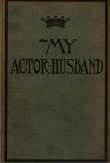
My Actor-Husband: A true story of American stage life

MY
ACTOR-HUSBAND
A TRUE STORY
OF
AMERICAN STAGE LIFE
NEW YORK
THE MACAULAY COMPANY
1913
COPYRIGHT, 1912, by
JOHN LANE COMPANY
To
PROFESSOR CHARLES T. COPELAND
Of Harvard University
| CHAPTER I, II, III, IV, V, VI, VII, VIII, IX, X, XI, XII, XIII, XIV, XV, XVI, XVII, XVIII, XIX |
FOREWORD—A RETROSPECT
IN presenting this autobiography to the public, the author feels it incumbent upon herself to impress upon her readers the fidelity and strict adherence to the truth, relative to the conditions which surround the player. In no instance has there been either exaggeration or a resort to imaginative creation. It is a true story with all the ugliness of truth unsoftened and unembellished. Nor is the situation presented an exceptional one. One has but to follow the career of the average actor to be convinced that the dramatic profession is not only inconsistent with but wholly hostile to the institution of marriage. Managers and actors alike know and admit this to be the truth—amongst themselves. What they say in print is, of course, merely so much self-exploitation. The success of any branch of "the show-business" is dependent on the bureau of publicity.
To one intimately acquainted with the life, the effusions of certain actors' wives, which from time to time appear in magazines for women, are ironically humourous. They are to be put down as the babbling of the newly-weds or the hunger for seeing their names in print. To hear the wife of a star declare that she always goes to the theatre and sits in the wings to watch her husband act is to presage the glaring head-lines of a divorce in the not-far-distant future. If it be not now, yet it will come, for those players who go through life with but one, even two marriages to their credit are the great exception to the rule. The actor's life precludes domesticity and without domestic life there can be no successful marriages.
Every community has its stage-struck girls. Year after year the Academies of Divine Art turn out graduates like so many clothes-pins. Neither aspirant nor parent appears to question her fitness for the career to which she aspires. Both are ignorant of the conditions which confront the tyro or they have a wholly erroneous idea of theatrical life—ideas culled from the articles which appear from time to time in the magazines over the signature of a prominent actress. The average reader has no way of knowing that these articles are not written by the actress herself, but by a needy scribbler to whom she grants permission to use her name, for the free advertising she will get in return. "My Beginnings," "Advice to Stage-Struck Girls Who Plan to Go on the Stage," etc., are alluring head-lines. The subject matter is a mass of glittering and trite generalities. Of the real conditions, the pitfalls, the drawbacks to be met, the outsider hears nothing. And when once in a decade a scribe dares to express himself truthfully concerning the moral atmosphere in the theatrical profession—(vide Mr. Clement Scott)—the air is rent with expostulations, denials and protestations from the members of "the profession." Interviews and letters pack the enterprising press. Many of those who protest the loudest have the least to lose.
It has been said that art bears no relation to morals: as well might it be declared that the blood bears no relation to health. Art must forever be imbued with the spirit of its delineator.
The moral status of the stage may not be a whit worse than that of half a dozen other professions. It is possible, but hardly probable. The very exigencies of the player's life make for a laxity and freedom from restraint. And in no other profession are the lives of the individual members so intimately concerned. The popular contention that a good woman can and will be good under any and all circumstances is a fallacy. The influence of environment is incomputable. I believe that my little friend Leila was fundamentally a good girl: in any other walk of life she would have remained a good girl. I believe that fundamentally my husband was a good man: in any other environment he would have been a good husband. The fantastic, unreal and over-stimulated atmosphere which the player breathes is not conducive to a sane and well-balanced life.
And if, in a ruthless rending aside of the tinselled illusions which enthrall the stage-struck girl, I have rendered a service, my own suffering will not have been in vain.
CHAPTER I