

You are here

قراءة كتاب Samba: A Story of the Rubber Slaves of the Congo
تنويه: تعرض هنا نبذة من اول ١٠ صفحات فقط من الكتاب الالكتروني، لقراءة الكتاب كاملا اضغط على الزر “اشتر الآن"
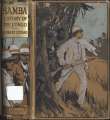
Samba: A Story of the Rubber Slaves of the Congo

SAMBA
A Story of the Rubber Slaves
of the Congo
By
HERBERT STRANG
Author of "One of Clive's Heroes," "Kobo,"
"Brown of Moukden," "Tom Burnaby," etc., etc
ILLUSTRATED BY WILLIAM RAINEY, R.I.
"Botofé bo le iwa!—Rubber is Death!"—Congo Proverb.
SECOND EDITION
LONDON
HENRY FROWDE ——— HODDER & STOUGHTON
OXFORD UNIVERSITY PRESS ——— WARWICK SQUARE, E.C.
1908
Copyright, 1906, by the BOBBS-MERRILL COMPANY,
in the United States of America.
Butler and Tanner, The Selwood Printing Works, Frome, and London
PREFACE
Nearly a generation has passed since King Leopold was entrusted by the great Powers with the sovereignty of the Congo Free State. The conscience of Christendom had been shocked by the stories, brought back by Stanley and other travellers, of Arab slave raids on the Upper Congo; King Leopold, coming forward with the strongest assurances of philanthropic motive, was welcomed as the champion of the negro, who should bring peace and the highest blessings of civilization to the vast territory thus placed under his sway. For many succeeding years it was supposed that this work of deliverance, of regeneration, was being prosecuted with all diligence; the power of the slave traders was broken, towns were built, roads made, railways opened—none of the outward signs of material progress were wanting.
But of late the civilized world has been horrified to find that this imposing structure has been cemented with the life blood of the Congo races; that the material improvements to which the administrators of Congoland can point, have been purchased by an appalling amount of suffering inflicted upon the hapless negroes. The collection of rubber, on which the whole fabric of Congo finance rests, involves a disregard of liberty, an indifference to suffering, a destruction of human life, almost inconceivable. Those who best know the country estimate that the population is annually reduced, under King Leopold's rule, by at least a hundred thousand. No great war, no famine, no pestilence in the world's history has been so merciless a scourge as civilization in Congoland.
Yet owing to mutual jealousies, the Powers are slow to take action, and while they hesitate to intervene, the population of this great region, nearly as large as Europe, is fast disappearing.
It has been my aim in this book to show, within necessary limitations, what the effect of the white man's rule has been.
If any reader should be tempted to imagine that the picture here drawn is overcoloured, I would commend him to the publications issued by Mr. E. D. Morel and his co-workers of the Congo Reform Association, with every confidence that the cause of the Congo native will thereby gain a new adherent.
I must express my very great thanks to the Rev. J. H. Harris and Mrs. Harris, who have spent several years on the Upper Congo, for their kindness in reading the manuscript and revising the proofs of this book, and for many most helpful suggestions and criticisms.
HERBERT STRANG.
CONTENTS
CHAPTER I
CHAPTER II
CHAPTER III
CHAPTER IV
CHAPTER V
CHAPTER VI
CHAPTER VII
CHAPTER VIII
CHAPTER IX
CHAPTER X
CHAPTER XI
CHAPTER XII
CHAPTER XIII
"Honour thy Father and thy Mother"
CHAPTER XIV
CHAPTER XV
CHAPTER XVI
CHAPTER XVII
CHAPTER XVIII
CHAPTER XIX
CHAPTER XX