

You are here

قراءة كتاب The Air Patrol: A Story of the North-west Frontier
تنويه: تعرض هنا نبذة من اول ١٠ صفحات فقط من الكتاب الالكتروني، لقراءة الكتاب كاملا اضغط على الزر “اشتر الآن"
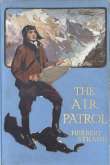
The Air Patrol: A Story of the North-west Frontier

href="@public@vhost@g@gutenberg@html@files@42417@[email protected]#lawrence-drops-a-bomb">LAWRENCE DROPS A BOMB
INTRODUCTORY
A summer afternoon was dwindling to night over a wild solitude among the borderlands of Northern India. The sun had already left the deep spacious valley, wherein, as the light waned, the greens changed to browns, the browns deepened to black, and the broad silver band that denoted a stream flowing along the bottom was dulled to the hue of lead. On the west, the harsh and rugged features of the mountains, towering to incalculable heights, were softened by the increasing shade; while the snowy summits, flushed by the declining rays, were scarcely distinguishable from the roseate clouds. Away to the east, where the sunlight still lingered, the huge mountain barrier showed every gradation of tone, from the greenish-black of the pine forest at the foot, through varieties of purple and grey, to the mingled pink and gold of the topmost crests. Every knob and fissure on the scarred face was defined and accentuated, until, as the curtain of shadow stole gradually higher, outlines were blurred, and the warm tints faded into drabs and greys.
Along the front of the mountains on the west there was a road--a track, rather, which might have seemed to the fancy to be desperately clinging to the rugged surface, lest it were hurled into the precipitous valley beneath. It followed every jut and indentation of the rock, here broadening, narrowing there until it was no more than a shelf; with twists and bends so abrupt and frequent that it would have been hard to find a stretch of fifty yards that could have been called straight.
Three horsemen were riding slowly northward along this mountain road, picking their way heedfully over its inequalities, edging nearer to the wall of rock on their left hand as they came to spots where a false step would have carried them into the abyss. To a distant observer it would have appeared as though they were moving without support on the very face of the mountain. They wore European garments, and the briefest inspection of their features would have sufficed to tell that they were Englishmen. Behind them, at some little distance, rode eight or ten bearded men of swarthy hue, whose turbans, tunics, and long boots proclaimed them as sowars of a regiment of Border cavalry. Still farther behind, in a long straggling line, came a caravan of laden mules, each in charge of a half-naked Astori. The tail of this singular procession, perhaps a mile behind the head, consisted of two native troopers like those who preceded them.
It was now nearly dark. Presently the three Englishmen halted, and the eldest of them, turning in his saddle, addressed a few words in Urdu to the dafadar of the sowars behind. The riders, English and native alike, dismounted, and led their horses up a slight ascent to the left, halting again when they reached a stretch of level ground which the leader had marked as a suitable camping place. A thin rill trickled musically down at the edge of this convenient plateau, forming a small quagmire in its passage across the track, and plunging over the brink to merge in the broader stream, now obliterated by the night, hundreds of feet below. The three Englishmen tethered their horses to some young pines that bounded the level space, then sat themselves upon a neighbouring rock, lit their pipes, and looked on in silence as the dusky troopers removed their saddle-bags and stood in patient expectancy.
By and by the head of the mule train appeared along the winding track. They came up one by one, and now the evening stillness was broken as the muleteers stripped their loads from the weary beasts, and with shrill and voluble chatter spread about the impedimenta of the camp. Quickly a tent was pitched, cooking pots were set up; and the Englishmen felt that comfortable glow which envelops travellers at the near prospect of supper after a long and toilsome march. The meal was almost ready when the end of the caravan arrived, and the two rearmost sowars rejoined their comrades, with no other sound than a guttural grunt of satisfaction.
The Englishmen were eating their food, too hungry and fatigued to talk, when one of them, looking southward along the track, suddenly pointed to a figure approaching on foot, scarcely discernible in the fast-gathering darkness. On this lonely road, which they had ridden the whole day long without meeting a single human being, the appearance of the stranger had for them something of the curious interest which one passing ship has for another in the ocean solitudes. They watched the figure as it grew more distinct--a tall gaunt man, naked save for a strip of cloth about his loins, long hair flowing wild over his shoulders, no staff in his hand, neither pack nor wallet upon his back. There was something weird and fascinating about this solitary figure, as it stalked on rapidly with long even stride, the head turning neither to left nor right. The newly-pitched camp was fully in his view, but the pedestrian gave it no heed. He came below it on the track, but neither altered his pace nor looked up when one of the muleteers shouted a salutation. Even when the eldest of the Englishmen, in the tone of one accustomed to be obeyed, challenged him sharply in the native tongue, and demanded whither he was going, the man did not turn his head or slacken speed, but merely lifted his lean right arm and pointed ahead, where the path disappeared in the gloom.
"What is your business?" asked the Englishman again.
And the reply came faintly back from the man, who had already passed by, and spoke without checking his step.
"I AM A SHARPENER OF SWORDS!"
And he vanished into the night.
CHAPTER THE FIRST
THE RUINED REST-HOUSE
The travellers proceeded with their meal almost in silence.
The two younger men had felt subdued and chastened ever since they had left Rawal Pindi, some days before. Major Endicott was too good a fellow to insist on the disapproval with which he regarded their company, but they were conscious of being on sufferance, which was the more irksome because of the whole-hearted admiration they were ready to lavish upon him. His mission was a delicate one,--one which, to any but a political officer of the frontier, would have appeared not a little hazardous; and he felt that it was gratuitously complicated by the journey of two young civilians through so wild a region at this particular time. A tribe in one of the valleys west of the mountain road, some three days' march from the spot on which the travellers were now encamped, had been giving trouble of late. It had always been troublesome. Only once had it been visited by a white man, Major Endicott himself; yet, accompanied by no more than a dozen troopers, he was venturing alone among these wild hill-men, to demand the payment of a fine in expiation of a recent raid upon their neighbours, and security for their future good behaviour. The alternative was an expedition in force, and Major Endicott had preferred to take whatever personal risks a visit might involve, rather than recommend a hill campaign, with all its difficulties and its heavy cost in money and men.
But he did not relish the accidental responsibility cast upon him by the presence of these two