

You are here

قراءة كتاب From the Cape to Cairo The First Traverse of Africa from South to North
تنويه: تعرض هنا نبذة من اول ١٠ صفحات فقط من الكتاب الالكتروني، لقراءة الكتاب كاملا اضغط على الزر “اشتر الآن"
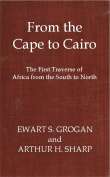
From the Cape to Cairo The First Traverse of Africa from South to North

FROM THE CAPE TO CAIRO
[Frontispiece: I advanced with outstretched Hand (missing from book)]
From the
Cape to Cairo
The First Traverse of
Africa from South to North
BY
EWART S. GROGAN
AND
ARTHUR H. SHARP
T. Nelson & Sons, Ltd.
copyright info
extra publisher info
TO
THE MEMORY OF
THE GREATEST AND MOST FAR-SEEING
OF
BRITISH IMPERIAL STATESMEN,
THE RT. HON. CECIL JOHN RHODES,
THIS VOLUME
IS RESPECTFULLY DEDICATED
BY
EWART SCOTT GROGAN
AND
ARTHUR HENRY SHARP.
Government House,
Buluwayo,
7th Sept., 1900.
My Dear Grogan,
You ask me to write you a short introduction for your book, but I am sorry to say that literary composition is not one of my gifts, my correspondence and replies being conducted by telegrams.
I must say I envy you, for you have done that which has been for centuries the ambition of every explorer, namely, to walk through Africa from South to North. The amusement of the whole thing is that a youth from Cambridge during his vacation should have succeeded in doing that which the ponderous explorers of the world have failed to accomplish. There is a distinct humour in the whole thing. It makes me the more certain that we shall complete the telegraph and railway, for surely I am not going to be beaten by the legs of a Cambridge undergraduate.
Your success the more confirms one's belief. The schemes described by Sir William Harcourt as "wild cat" you have proved are capable of being completed, even in that excellent gentleman's lifetime.
As to the commercial aspect, every one supposes that the railway is being built with the only object that a human being may be able to get in at Cairo and get out at Cape Town.
This is, of course, ridiculous. The object is to cut Africa through the centre, and the railway will pick up trade all along the route. The junctions to the East and West coasts, which will occur in the future, will be outlets for the traffic obtained along the route of the line as it passes through the centre of Africa. At any rate, up to Buluwayo, where I am now, it has been a payable undertaking, and I still think it will continue to be so as we advance into the far interior. We propose now to go on and cross the Zambesi just below the Victoria Falls. I should like to have the spray of the water over the carriages.
I can but finish by again congratulating you, and by saying that your success has given me great encouragement in the work that I have still to accomplish.
Yours,
C. J. RHODES.
PREFACE TO NEW EDITION.
Since bringing out the first edition of this book, I have revisited the United States, Australasia, and Argentina in order that I might again compare the difficulties before us in Africa with the difficulties which these new countries have already overcome. I am now more than ever satisfied that its possibilities are infinitely great. Of the fertility and natural resources of the country I had no doubt. But two great stumbling-blocks loomed ahead: they were the prevalence of malaria and the difficulty of initial development owing to the dearth of navigable waterways. The epoch-making studies by Major Ross and other scientists of the influence of the mosquito on the distribution of malaria have shewn that we are within measurable distance of largely minimising its ravages, if not of completely removing it from the necessary risks of African life. A comparison of the death-rates in Calcutta, Hong-Kong, and other malarious regions with the present rates has also proved how immense is the influence of settlement on climate. As to the other obstacle, the question of access, I was amazed to find that in the United States the railways practically have absorbed all the carrying trade of the magnificent waterways, which intersect the whole country east of the Rockies. Naturally, these waterways were of immense assistance in the original opening up of the country, but now that the railways are constructed, they are of little importance.
I would also point out to those who still profess mistrust of the practical objects of railway construction in Africa, the object-lesson which the trans-American lines afford. They were pushed ahead of all settlement into the great unknown exactly as the Cape to Cairo line is being pushed ahead to-day. But there is this difference: in America they penetrated silent wastes tenanted by naught else than the irreconcilable Redskin, the prairie marmot, and the bison; while in Africa they pass through lands rich in Nature's products and teeming with peoples who do not recede before the white man's march.
Another point: when the main railway system of Africa, as sketched out by Mr. Rhodes, is complete, there will be no single point as remote from a port as are some of the districts in America which are to-day pouring out their food-stuffs along hundreds of miles of rail.
In the words of the old Greek, "History is Philosophy teaching by examples." The world writhes with the quickening life of change. The tide of our supreme ascendancy is on the ebb. Nations, like men, are subject to disease. Let us beware of fatty degeneration of the heart. Luxury is sweeping away the influences which formed our character. It is as though our climate has been changed from the bleak northern winds to the tropic's indolent ease. Yet we have still a chance. While we sleep, broad tracks have been cut for us by those whom we revile. Far and wide our outposts are awake, beckoning to the great army to sweep along the tracks. Let each man with means and muscles for the fray go forth at least to see what empire is. Clive, Hastings, Rhodes, a thousand lesser men whose tombs are known only to the forest breeze, have left us legacies of which we barely dream. Millions of miles of timber, metals, coal, lie waiting for the breath of life, "pegged out" for Britain's sons. In these our destiny lies. We live but once: let us be able, when the last summons comes, to say with the