

You are here

قراءة كتاب The Data of Ethics
تنويه: تعرض هنا نبذة من اول ١٠ صفحات فقط من الكتاب الالكتروني، لقراءة الكتاب كاملا اضغط على الزر “اشتر الآن"
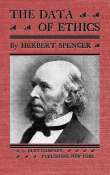

The Project Gutenberg eBook, The Data of Ethics, by Herbert Spencer
This eBook is for the use of anyone anywhere at no cost and with almost no restrictions whatsoever. You may copy it, give it away or re-use it under the terms of the Project Gutenberg License included with this eBook or online at www.gutenberg.org
Title: The Data of Ethics
Author: Herbert Spencer
Release Date: June 30, 2014 [eBook #46129]
Language: English
Character set encoding: UTF-8
***START OF THE PROJECT GUTENBERG EBOOK THE DATA OF ETHICS***
E-text prepared by
Marilynda Fraser-Cunliffe, David Garcia, Charlie Howard,
and the Online Distributed Proofreading Team
(http://www.pgdp.net)
from page images generously made available by
Internet Archive
(https://archive.org)
| Note: | Images of the original pages are available through Internet Archive. See https://archive.org/details/dataofethic00spenuoft |

HERBERT SPENCER.
THE DATA
OF ETHICS
By HERBERT SPENCER
Author of "FIRST PRINCIPLES," "EDUCATION," etc.

A. L. BURT COMPANY,
PUBLISHERS, NEW YORK
AUTHOR'S PREFACE.
A reference to the programme of the "System of Synthetic Philosophy" will show that the chapters herewith issued constitute the first division of the work on the Principles of Morality, with which the System ends. As the second and third volumes of the Principles of Sociology are as yet unpublished, this installment of the succeeding work appears out of its place.
I have been led thus to deviate from the order originally set down by the fear that persistence in conforming to it might result in leaving the final work of the series unexecuted. Hints, repeated of late years with increasing frequency and distinctness, have shown me that health may permanently fail, even if life does not end, before I reach the last part of the task I have marked out for myself. This last part of the task it is to which I regard all the preceding parts as subsidiary. Written as far back as 1842, my first essay, consisting of letters on The Proper Sphere of Government, vaguely indicated what I conceived to be certain general principles of right and wrong in political conduct, and from that time onward my ultimate purpose, lying behind all proximate purposes, has been that of finding for the principles of right and wrong, in conduct at large, a scientific basis. To leave this purpose unfulfilled, after making so extensive a preparation for fulfilling it, would be a failure the probability of which I do not like to contemplate, and I am anxious to preclude it, if not wholly, still partially. Hence the step I now take. Though this first division of the work terminating the Synthetic Philosophy, cannot, of course, contain the specific conclusions to be set forth in the entire work, yet it implies them in such wise that, definitely to formulate them requires nothing beyond logical deduction.
I am the more anxious to indicate in outline, if I cannot complete, this final work, because the establishment of rules of right conduct on a scientific basis is a pressing need. Now, that moral injunctions are losing the authority given by their supposed sacred origin, the secularization of morals is becoming imperative. Few things can happen more disastrous than the decay and death of a regulative system no longer fit, before another and fitter regulative system has grown up to replace it. Most of those who reject the current creed appear to assume that the controlling agency furnished by it may safely be thrown aside, and the vacancy left unfilled by any other controlling agency. Meanwhile, those who defend the current creed allege that in the absence of the guidance it yields, no guidance can exist: divine commandments they think the only possible guides. Thus, between these extreme opponents, there is a certain community. The one holds that the gap left by disappearance of the code of supernatural ethics need not be filled by a code of natural ethics, and the other holds that it cannot be so filled. Both contemplate a vacuum, which the one wishes and the other fears. As the change which promises or threatens to bring about this state, desired or dreaded, is rapidly progressing, those who believe that the vacuum can be filled, and that it must be filled, are called on to do something in pursuance of their belief.
To this more special reason I may add a more general reason. Great mischief has been done by the repellent aspect habitually given to moral rule by its expositors, and immense benefits are to be anticipated from presenting moral rule under that attractive aspect which it has when undistorted by superstition and asceticism. If a father, sternly enforcing numerous commands, some needful and some needless, adds to his severe control a behavior wholly unsympathetic; if his children have to take their pleasures by stealth, or, when timidly looking up from their play, ever meet a cold glance or more frequently a frown, his government will inevitably be disliked, if not hated, and the aim will be to evade it as much as possible. Contrariwise, a father who, equally firm in maintaining restraints needful for the well-being of his children or the well-being of other persons, not only avoids needless restraints, but, giving his sanction to all legitimate gratifications and providing the means for them, looks on at their gambols with an approving smile, can scarcely fail to gain an influence which, no less efficient for the time being, will also be permanently efficient. The controls of such two fathers symbolize the controls of Morality as it is and Morality as it should be.
Nor does mischief result only from this undue severity of the ethical doctrine bequeathed us by the harsh past. Further mischief results from the impracticability of its ideal. In violent reaction against the utter selfishness of life as carried on in barbarous societies, it has insisted on a life utterly unselfish. But just as the rampant egoism of a brutal militancy was not to be remedied by attempts at the absolute subjection of the ego in convents and monasteries, so neither is the misconduct of ordinary humanity, as now existing, to be remedied by upholding a standard of abnegation beyond human achievement. Rather the effect is to produce a despairing abandonment of all attempts at a higher life. And not only does an effort to achieve the impossible end in this way, but it simultaneously discredits the possible. By association with rules that cannot be obeyed, rules that can be obeyed lose their authority.
Much adverse comment will, I doubt not, be passed on the theory of right conduct which the following pages shadow forth. Critics of a certain class, far from