

You are here

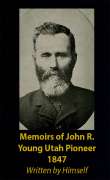
قراءة كتاب Memoirs of John R. Young Utah Pioneer 1847
تنويه: تعرض هنا نبذة من اول ١٠ صفحات فقط من الكتاب الالكتروني، لقراءة الكتاب كاملا اضغط على الزر “اشتر الآن"

the motive was in asking for the battalion. If the men enlisted. Captain Allen pledged himself to be a friend to the Boys "as long as breath remained in his body;" and, be it said to his honor, faithfully and conscientiously did he keep that pledge.
After free discussion by several of the brethren President Young arose. Instantly breathless silence reigned. He was not a brilliant speaker like Orson Hyde, Parley P. Pratt, or Amasa M. Lyman, whose masterful speeches so often charmed their assemblies; but he possessed a magnetism and forcefulness that always claimed attention. The Saints realized that he was a man of wonderful resources.
"I want to say to the brethren present that this is a surprise to me, but I believe Captain Allen to be a gentleman, and a man of honor, and I accept his pledges to be a friend to our boys. Now, I would like the brethren to enlist and make up a battalion, and go and serve your country, and if you will do this, and live your religion, I promise you in the name of Israel's God that not a man of you shall fall in battle."
That settled the matter. Brigham's promise was as good as gold; the clouds passed away, the spirit of unrest fled the camp, the people returned to their tents satisfied, and on the morrow the stars and stripes were unfurled and nailed to a liberty pole. Duzett's martial band and Pitt's celebrated brass band were hauled in wagons from camp to camp and aided, with soul stirring music, to enthuse the boys. With Brigham and the twelve as recruiting officers the matter went with a rush. In no part of our broad land were five hundred men ever more quickly enlisted than in the Mormon camps.
The charge of treason and of want of loyalty to our country was flung back into the teeth of those who uttered it. The sacrifice having now been made, the blessing was sure to follow. The raising of the Mormon battalion was an event of great importance, for while it brought about many heartaches and much individual suffering, it taught a lesson of patriotism never to be forgotten. It led to enlarged emphasis in regard to our relationship to the national government, for Latter-day Saints have ever taught that the Constitution of our country was given by inspiration, and consequently that all laws made in accordance therewith ought to be loved, honored, and obeyed.
As soon as the labor of raising the battalion was accomplished, Brigham turned the energies of his active mind to the task of pushing further west. The hope of reaching Oregon or California that season was given up; but Brigham was anxious to place the turbid waters of the Missouri between us and our old enemies. About the 1st of July the ferry boat was launched and families began crossing over into the land of the Otoes.
Boy that I was, the swimming of the cattle was an achievement of great interest. Early in the morning, so that the sun might not shine in the cattle's faces, a boatload was taken across and held on the opposite shore. Then a thousand head were driven some distance up the stream and forced into the river. Good swimmers would climb upon the backs of some of the strongest oxen, and slapping them on the sides of the faces would guide them into the current. Soon we had a string of animals reaching from one shore to the other. Of course it was lively and exciting, and called for courage and physical endurance.
In days of rest our camp would present scenes of competitive athletic sports which would have been a credit to any nation. Brigham, like Joseph, was very fond of witnessing tests of manhood, and always had near him trusted men, who could be relied upon for strength, courage, and fidelity. In the act of swimming our cattle not an animal was lost; nor were the hardy swimmers who breasted the Missouri river with them ever lost sight of thereafter.
About 3 miles southwest of the ferry a place was selected for a winter encampment and called Winter Quarters. It is now called Florence. A town was laid out, a hewn-log meetinghouse was erected, a grist mill was built, and a day school was conducted in the meetinghouse under the direction of Professor Orson Spencer of Boston. In the evening a grammar school was taught.
I remember one of the short humorous lectures given by Apostle George A. Smith, cousin of Joseph. Speaking on the beauties of simplicity in language, he told, by contrast, the following story: A young graduate called at a country hotel for entertainment and said to the hostler,
"Detach the quadruped from the vehicle, stabulate him, donate him a sufficient quantity of nutrition aliment, and when the aurora of day shall illuminate the horizon, I will award thee a pecuniary compensation."
The boy ran into the house and said, "Landlord, come out; there is a Dutchman here, and I can't understand a word he says."
As soon as it was decided to remain over winter an application was made to Otoe chiefs for permission to remain on their lands until spring. In consideration of some presents, their consent was obtained, but they did not welcome us as the Pottowattamies had done. The finest spots of meadow lands were sought out and soon the white man's scythes were cutting heavy swaths and hay stacks were looming up on all sides.
The rising of the stacks seemed to be a signal for the Indians to make raids upon our stock. Joseph F. Smith, then a lad of nine years, and two companions by the name of Aldrich were herding milk cows. At about three o'clock in the afternoon the Indians raided the herd, the herders barely escaping with their lives. Fortunately Captain Davis with his mounted scouts were nearby and recovered the cattle. From that time on our stock was closely guarded.
Trouble next began with the government Indian agent who lived at Sarpees Point. He ordered our people to move off from the Otoes' lands, and threatened to eject them by force. He even went so far as to refuse to let our people go down to the frontier settlements in Missouri without permits from him. As teams would return he would stop them by force and search the wagons under the pretext of looking for firearms, ammunition, and whiskey. As a matter of fact we needed all these things; especially arms and ammunition for defense and self protection, and as the summer passed on, many of the Saints were afflicted with malarial fevers, and alcohol was needed for medical purposes.
But Mitchell refused to allow anything of the kind to pass his post on its way to our camps. Several barrels of alcohol bought openly from merchants at St. Joseph were knocked in the head and spilt by Mitchell's orders. These oppressive acts were very humiliating-; and it required constant vigilance on the part of our leaders to keep some of our boys from resenting these open insults.
Fortunately for us, Colonel Kane was still at our camps. He wrote to his father at Philadelphia, and the judge visiting Washington ably represented our true condition to President Polk and his cabinet. The result was, Mr. Indian agent was called down and the Mormons were allowed to winter on the west bank of the Missouri river.
Many years ago I visited Hilo, a beautiful city on the Island of Hawaii. I noticed when gentlemen walked out that they always carried umbrellas with them; and when I asked them why, the reply was, that you never can tell here when it's going to rain. That's a good representation of Mormon life. We never know when a storm is brewing from the outside, nor from what quarter the wind will blow.
When the main body of the Church left Nauvoo, it was understood with the mob that the poor and destitute would be allowed to remain in peace, in the possession of their homes, until our leaders should find a place for our permanent settlement. But in this promise we were disappointed. Those who thrust us out, were not only desirous of being rid of our presence, but they sought our utter destruction, as the history of all their aggressive operations, when taken collectively, plainly shows.
See how thoughtfully they waited until the strength of our camps, the battalion was gone; till